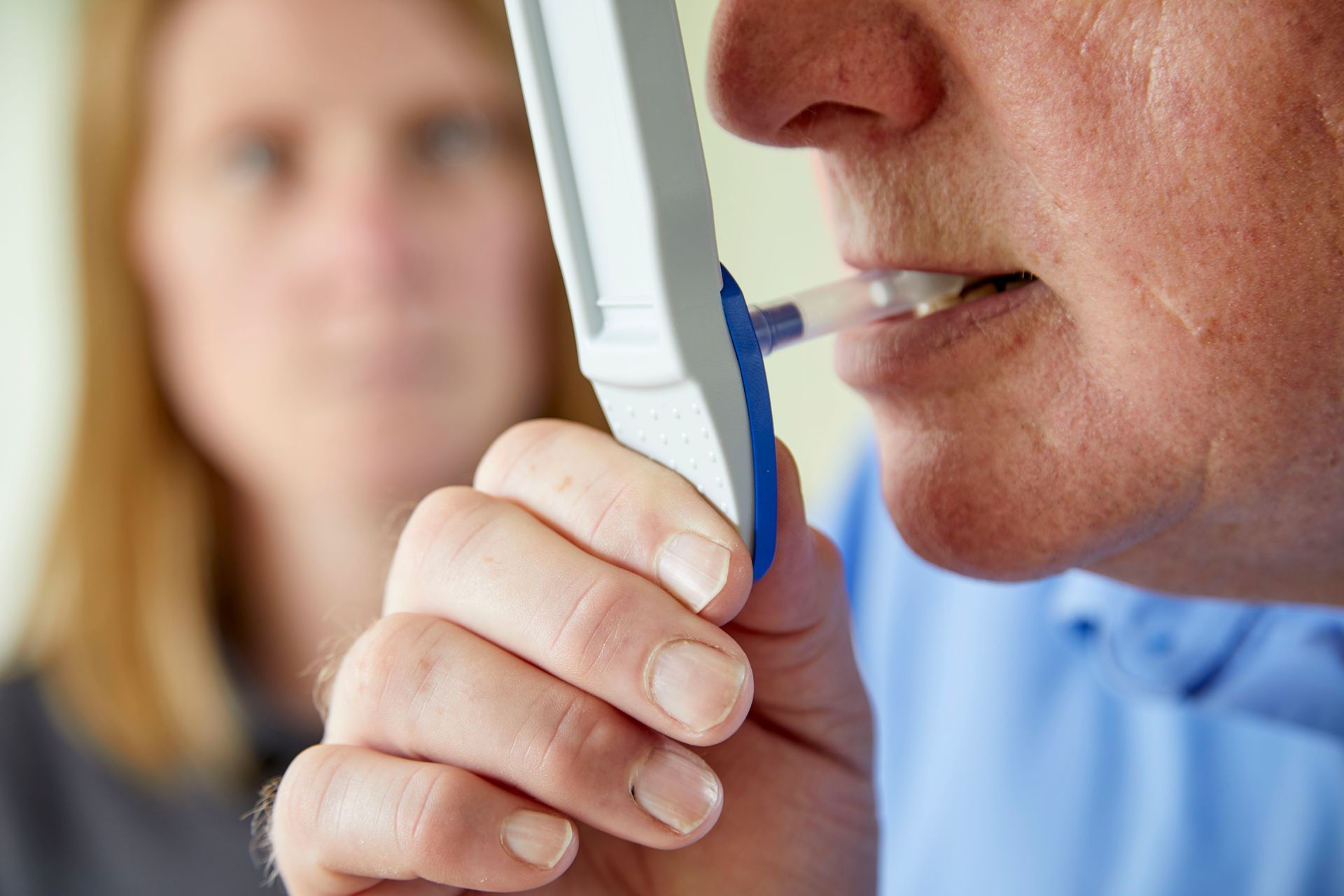

Your testing programme ran last quarter. Everyone passed. That should be reassuring.
Here's the thing, it's only reassuring if the kit actually worked.
False negatives from non-validated drug testing equipment are more common than most HR teams realise. The uncomfortable part is that you'd never know. The result says negative. The file gets signed off. The employee goes back to operating the machinery, driving the vehicle, working at height. And the testing programme that was supposed to protect the business and the workforce, just failed to do its job.
This isn't a theoretical risk. It's a structural one. And it comes down to something most purchasing decisions never consider: whether the kit was validated in the first place.
The problem with cheap kit
You can buy drug testing devices online for very little money. Some are sold in bulk. Some come with what look like professional instructions. And
some of them will produce a result - positive or negative, that you have no real basis for trusting.
Here's why.
An approved drug testing kit gives a positive or negative indication based on a confirmed, validated cut-off level. If the kit indicates positive, a second sample goes to the laboratory. The lab confirms the result and provides the actual level, where applicable. That's the process. That's what makes the outcome legally defensible.
Cheap, unvalidated kits have two problems - and they run in opposite directions.
The first is false negatives. Many cheaper kits have cut-off levels set so high that someone with a meaningful level of drugs in their system will return a negative result. The kit doesn't flag them. They go back to work. Your records show a clean test. Nobody knows.
The second is false positives. Because the kit hasn't been validated and hasn't gone through any process that verifies the cut-off levels are set correctly and consistently, you can't trust a positive result either. Someone gets flagged who shouldn't be. That's a different kind of problem, but it's equally serious: potential wrongful disciplinary action, a contested dismissal, and a result that falls apart the moment it's examined.
Both failures come from the same root cause. Without validation, there's no verified standard behind the kit. The cut-off level printed on the packaging may not reflect a threshold that's been tested or confirmed by anyone with the authority to do so.
So when the result comes back negative, is it because the person was genuinely below the threshold? Or because the threshold was set too high to reflect a meaningful level?
When it comes back positive, is it because they're genuinely above the cut-off? Or because the kit flagged something it shouldn't have?
With unvalidated equipment, you don't have a reliable answer to either question. And if it ever reaches tribunal, neither does anyone else.
What this looks like in practice
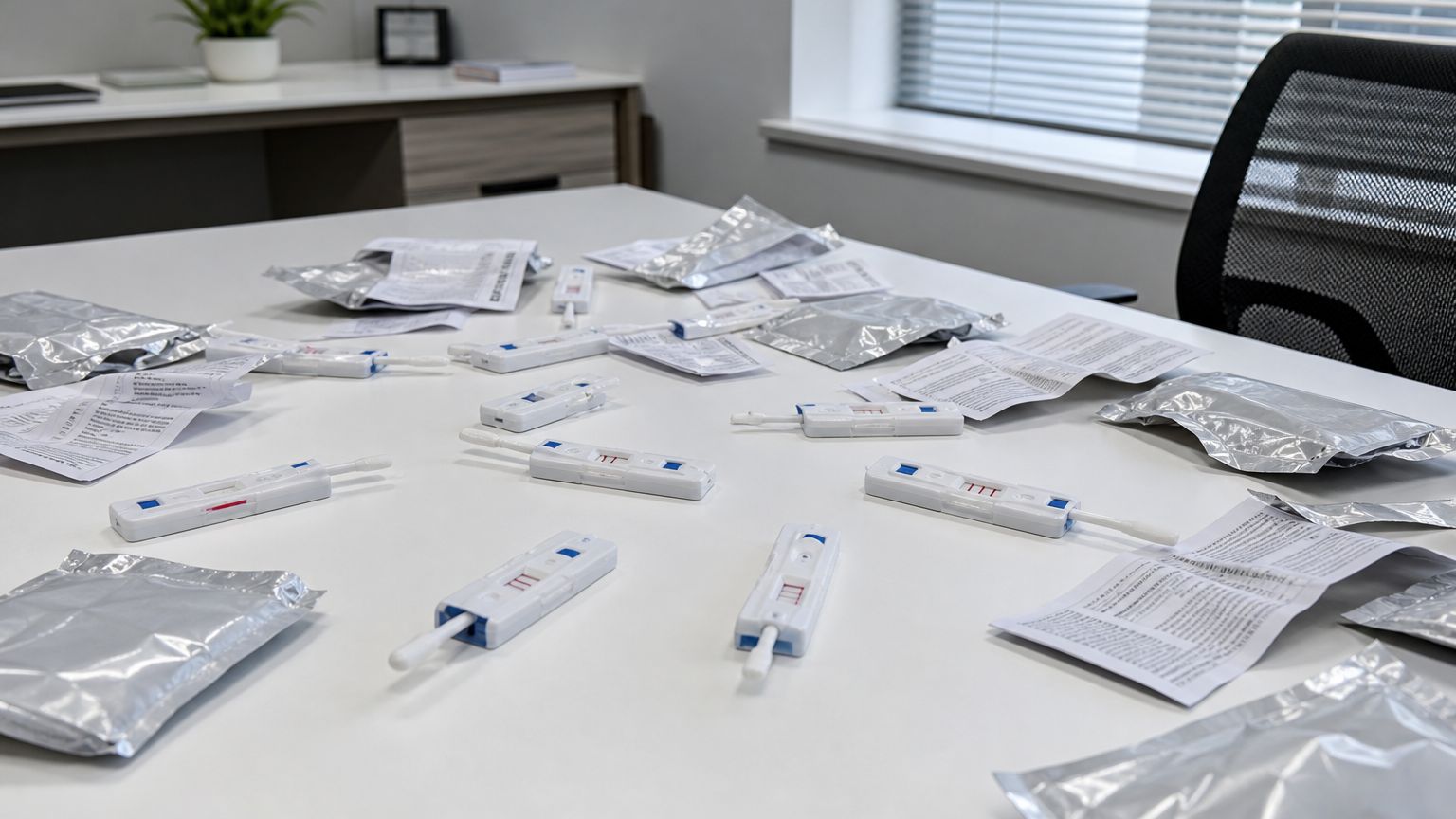
We were called out to a local manufacturer - a for-cause incident, an employee involved, and a situation that needed handling. When we arrived, the table told the story before anyone said a word.
Multiple test kits. Packets torn open. Results laid out showing a negative, a non-negative, and at least one that couldn't be read at all. They'd run test after test trying to get something they could act on, and what they'd ended up with was a set of contradictory results, a process that had completely broken down, and an employee who had been asked to keep submitting to repeated tests with no coherent outcome.
That's not just an operational problem. From the employee's point of view, being asked to keep testing with no clear process and no consistent result is genuinely unacceptable. And from the manager's point of view, standing in that room with a handful of conflicting results and no idea what any of them mean - that's not a testing programme. That's a problem that got worse the more they tried to solve it.
We ran one test. It indicated a non-negative screen for cocaine. A back-to-lab sample was collected immediately and sent for laboratory analysis. The lab confirmed the sample positive for that drug group.
One test. Clear result. Proper process. Done.
The frustrating part, and I'll be honest about this, is that this wasn't the first time we'd been called by this company. They use their own kit as standard. They call us when things go wrong. And then they go back to the same kit. The underlying problem doesn't get fixed, so the same situation keeps happening.
That pattern is more common than most people realise. Companies invest in testing equipment, build a process around it, and then find it very hard to acknowledge that the kit itself is the issue. It's easier to treat each failure as a one-off than to look at what it's telling you about the programme overall.
Why it matters more than the cost saving
The question isn't whether cheap kit saves money. Sometimes it does, in the short term. The question is what you're actually buying when you buy a drug testing programme.
If you're buying paperwork, something to show an auditor, something to tick on a compliance checklist - then fine, the cheap kit does that. It produces a result. The result gets filed. Box ticked.
But if you're buying genuine risk management, a programme that deters use, identifies impairment, gives your workforce confidence in the process, and protects your business at tribunal if something goes wrong - then the cheap kit doesn't do that. It may produce a result that looks the same on paper but means something completely different in practice.
Most companies assume those two things are equivalent. They're not, and that gap is exactly where the exposure sits.
What "legally defensible" actually means
Not all drug testing equipment is equal, and the difference isn't always obvious from the outside. Home Office approved devices sit at the highest standard - the same standard used in police roadside testing. Chain of custody documentation. Confirmed, validated cut-off levels. Results that hold up under scrutiny, including at employment tribunal.
But Home Office approval isn't the only mark of a kit worth using. Some devices that sit outside that approval have been extensively tested and operate with confirmed, independently validated cut-off levels. Those can be fit for purpose in the right context.
What isn't fit for purpose is equipment where nobody has verified what the cut-off levels actually are, or whether they reflect a meaningful threshold at all. That's the real line. Not approved versus unapproved - validated versus unvalidated.
An employee who tests positive and disputes the result will challenge the equipment first. That's standard. If your device has no validation behind it, no confirmed cut-off levels, and there's no chain of custody documentation, that challenge has a fair chance of succeeding. Which means the dismissal fails. Which means the company carries the cost - not just financially, but in terms of what that outcome signals to the rest of the workforce.
It's worth asking: if the result can't be defended, what exactly was the testing programme for?
The independence question
There's a separate issue that tends to come up once companies have been running internal programmes for a while. And it's a bit awkward, because nobody wants to suggest their own managers aren't trustworthy.
Internal testing - where a nominated manager or HR professional administers the tests can create a bias problem. Not necessarily an intentional one. But if the person running the test has a working relationship with the person being tested, that relationship affects things. The process gets slightly looser. The documentation is a bit less thorough. In some cases, there's a quiet decision made about whether this particular result really needs to go anywhere.
An independent provider removes that dynamic entirely. The technician has no relationship with the workforce. No allegiance to protect. The process runs the same way every time regardless of who's being tested, what their role is, or how long they've been with the company. And if a result is ever challenged, there's no suggestion that the testing was anything other than impartial.
That independence is worth quite a lot when you're sitting across from an employment solicitor.
A practical question worth asking
If you're running a testing programme whether internally or through a provider, there are a few things worth checking.
Has the equipment been validated? Not just sold as professional grade, but specifically tested with known and confirmed cut-off levels that reflect a meaningful threshold? If you're not sure, that's worth finding out.
Is there a documented chain of custody for every test? Not just a result, but a record of who collected the sample, how it was handled, and what happened to it between collection and the laboratory confirmation (if this is required)?
If a result were challenged at tribunal tomorrow, could you defend the process? Not just the outcome - the process. The equipment, the technician, the documentation, the policy the testing sits within.
Most companies running internal programmes, if they're honest about it, would struggle to answer yes to all three. That's not a criticism. It's just where these programmes usually end up when they've grown without anyone asking these questions at the start.
The testing programme exists to protect people. The workforce, the business, the clients who rely on that workforce showing up fit to work. If the kit isn't up to the standard that protection requires, the programme is running, the boxes are getting ticked but the actual risk is sitting exactly where it was before anyone started testing.
That's a reasonable thing to want to know about.
If you're not sure whether your current programme would hold up; the kit, the process, the documentation, that's worth finding out before something happens that forces the question.
Give us a call or drop us a message at lemoncherry.co.uk.
Frequently Asked Questions
Q: How do I know if my current drug testing kit has been validated? A: Ask your supplier directly what the cut-off levels are of the kit and if they have been independently tested and confirmed. Home Office approved devices will have documentation to support this. If your supplier can't tell you clearly how the cut-off levels were determined and validated, that's worth taking seriously.
Q: What's the difference between a screening result and a confirmed result? A: The initial test gives a negative or a non-negative reading based on whether the sample is above or below a specified cut-off level. If it indicates non-negative, a second sample goes to an independent laboratory, which confirms the result and provides the actual level, where appropriate. The lab confirmation is what makes the result legally defensible. A screening result alone isn't enough to base disciplinary action on.
Q: If everyone passed our last test, does that mean the programme is working? A: Not necessarily. If the kit's cut-off levels haven't been validated, a negative result doesn't confirm the person was below a meaningful threshold, it confirms the kit didn't flag them. Those are two different things. The only way to know your programme is working is to know the equipment behind it has been properly tested.
Q: Can we keep testing internally but improve the process? A: Some companies run hybrid models using an external provider for random testing while training internal managers to handle callout situations with validated equipment and the right documentation. That can work, provided the kit, the training, and the chain of custody process all meet the required standard. The issue with purely internal testing isn't usually the people, it's the equipment and the documentation that tends to fall short.
Q: What happens if a positive result is challenged at tribunal? A: The first thing examined is the testing process - the equipment used, whether it's been validated, how the sample was handled, whether chain of custody was maintained and process was followed correctly, and whether the result was confirmed by a laboratory. If any of those steps don't hold up, the result becomes difficult to defend. That doesn't automatically mean the employee wins, but it significantly weakens the company's position and can lead to a failed dismissal.
About Catherine Lambert
Catherine Lambert is Managing Director of Lemon Cherry, a specialist independent drug and alcohol screening company working with businesses across the UK. With over two decades of experience in evidential testing, she's seen what happens when testing programmes that looked fine on paper get examined properly. If you want to know whether your current programme would hold up, it's usually worth having that conversation before something goes wrong. lemoncherry.co.uk